

Trendsetting in Southwest Washington
Photos and Story by Heidi Roth - July 29, 2026
Less... but better
As I enter month sixth of being self-employed full time, I’m beginning to notice a pattern in the producers and growers I write about, and I’d like to get it down on “paper” before I decide it’s all in my head.
Call it “six degrees of separation” or the “six degrees of Kevin Bacon”, but on any given day, the work I’m doing for one client almost inevitably creates an opportunity for me to create an outcome for a quasi-connected client.
Case in Point: a farm visit to TUNaWERTH Creamery in Oakville for Shona’s Café’s social media produced content not only for Shona, but for the Southwest Washington Food Hub and Colvin Ranch Provisions whom I also work with.
This pattern could be a coincidence three times in a row. Or, it could be the thing this region does better than anywhere else I’ve worked.
My niche — the food and ag businesses and organizations I’ve currently chosen to work with — are small or “smallish” and also a bit new to the market. This means they’re almost always growing and scaling, but none of them seem to be in an all-fired up hurry to do it quickly. When I’ve straight up asked them if they think about expanding their product line, getting into more stores, or chasing the numbers that businesses are told they’re supposed to want, they all say the same thing, and usually before I can even finish asking: “No thanks, we’d rather the product (or service) stay good.”
I first noticed this with Shona’s Café, who happened to be my very first freelance client. She’s a tiny but mighty micro-bakery in Chehalis churning out British and Northern Ireland comfort food built around the fresh local ingredients available in abundance here in Lewis County. She’s a bit of an outlier with her hyper-local sourcing. She’s also a lovely, stubborn exception loathe to vacate the space she shares with a yarn store that gave her a start in order to expand.
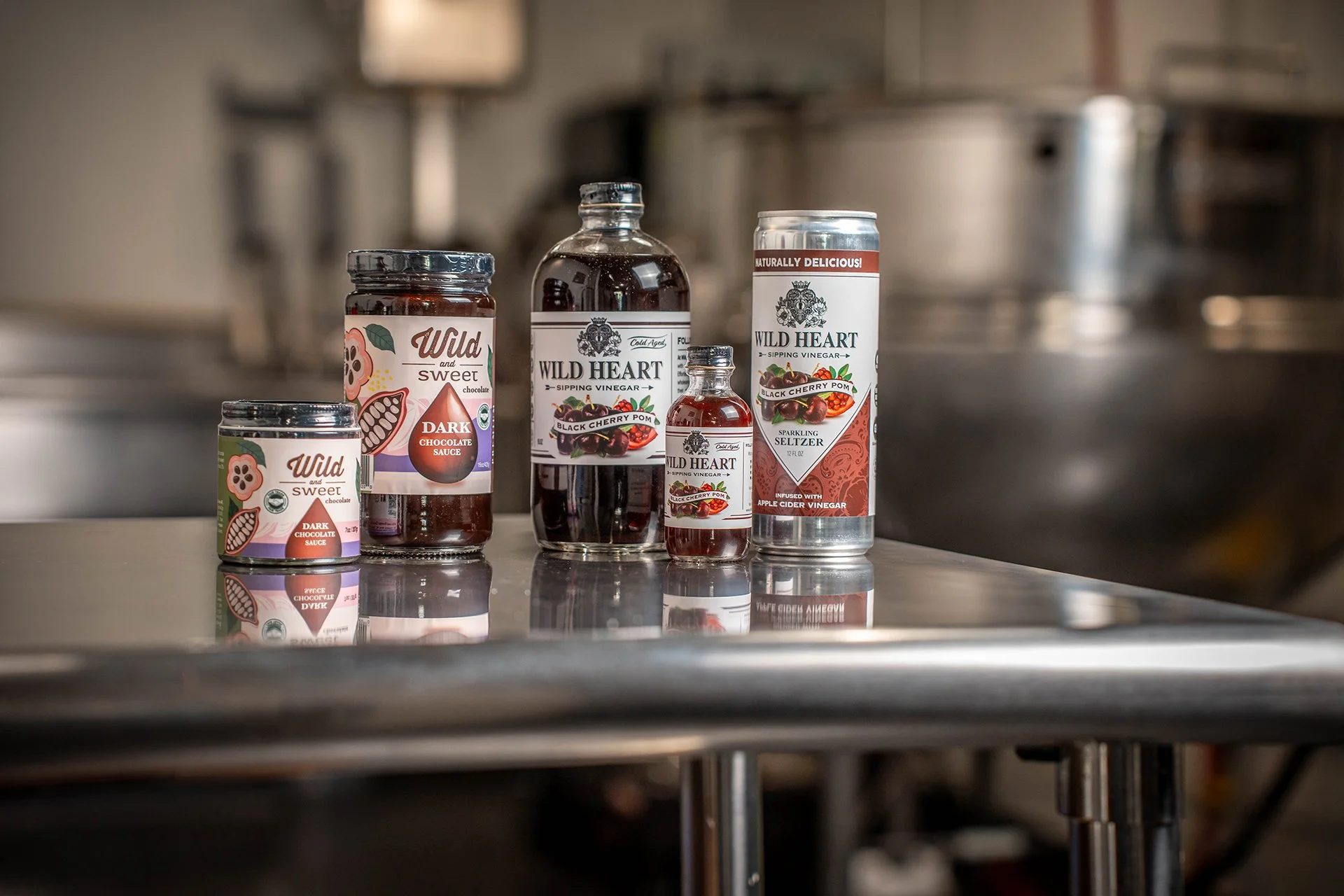
So now the stage is set to tell you about how a sipping vinegar and a dark chocolate sauce, two seemingly misaligned bedfellows, came to be produced under one roof by Jenni Bourdon and Cindy Ulrich, who have every intention of keeping their business “small, but better.”
Cindy used to own Bittersweet Chocolates, the cutest little truffle shop in downtown Olympia. When she and her partner closed the shop at the end of 2025, people came in literally crying — not over the truffles so much (which were glorious) but over their luxurious dark chocolate sauce. That was the thing customers actually couldn’t let go of.
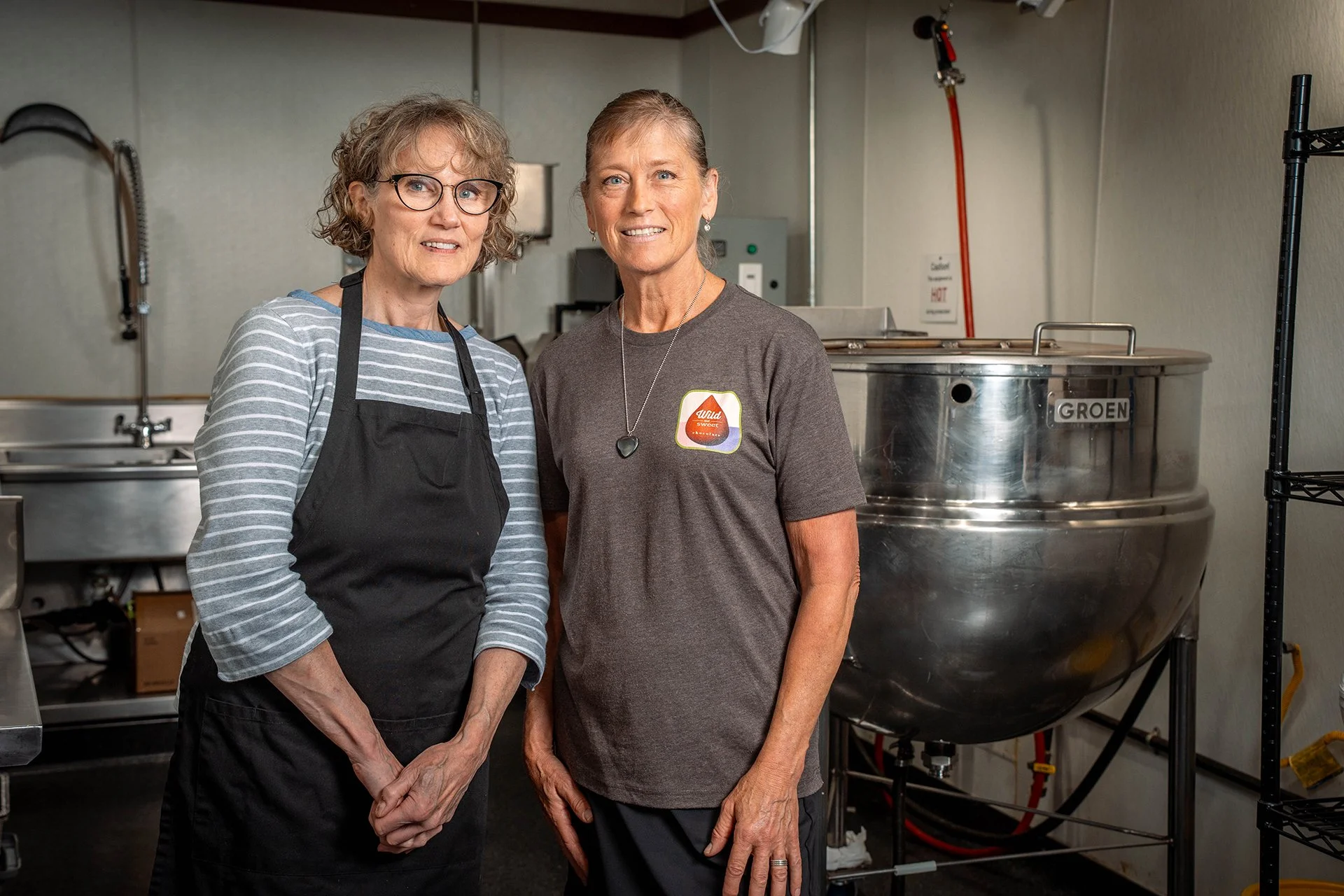
Cindy started quietly looking into what she’d need to bring the sauce back on her own, and the prognosis did not look good. As a one-woman operation who no longer had access to a commercial kitchen, additional things like licensing and production space were just additional infrastructure bottlenecks, and she was about to let the project go.
Then Jenni called her. Twice, actually. Cindy let the first invitation to “get coffee” sit for months, the way you do when you already suspect the conversation might ask something of you you don’t have the bandwidth to navigate. But Jenni didn’t give up, and she made Cindy an offer she really couldn’t refuse: fold the chocolate sauce under Wild Heart’s existing license, production space, insurance, and bookkeeping. The way Jenni puts it, “I told Cindy the house is already built — we just need to move you into one of the bedrooms”
The house Jenni’s talking about was built on the foundation of Sandstone Distillery, where she and her husband John and their family have been hand-crafting, carefully fermenting, and artfully distilling spirits from Washington-grown grains. Jenni began making shrubs to provide visitors to the distillery unique and nuanced cocktail offerings in addition to the more traditional gin and tonics or old fashioneds. But with flavors like Chanterelle-Fig and Wild Honey, and Carrot-Thai Basil-Coriander, the shrubs themselves soon became fan favorites and Jenni began the process of building a distribution channel exclusively for the sipping vinegars.
The first jar of chocolate sauce rolled off their two-woman production line on April 18th, and they’ve sold close to a thousand jars since, without a finished website and honestly, without really trying.
Before you ask if there’s vinegar in the chocolate sauce (they get asked that a lot at farmers’ markets), the answer is no — but there is a shared business philosophy and a carryover from how Jenni makes her shrubs: you put two things together that don’t obviously belong, and it just works. Kind of like how a Pear Cardamom Rosemary sipping vinegar (one of Wild Heart’s most popular flavors) can jazz up a cocktail, that same logic applies to a chocolate sauce built around that same slow, ingredient-obsessed methodology. While the chocolate sauce is under the Wild Heart infrastructure, the branding for Wild Heart and Wild and Sweet is deliberately separate, because a sipping vinegar customer and a chocolate sauce customer aren’t always the same people walking in the door.
Once again, pristine ingredients and attention to sourcing are the heart of their method. A Wild Heart Sipping Vinegar shrub needs a minimum of two to three months of aging before it’s ready to hit shelves. That means if she runs out of a flavor at a market, she’s out for months. There’s no way of faking that timeline. To help mitigate that bottleneck in production, she recently bought and retrofitted a 40-foot refrigerated cargo container just to have enough space to age vinegar in 50-gallon drums.
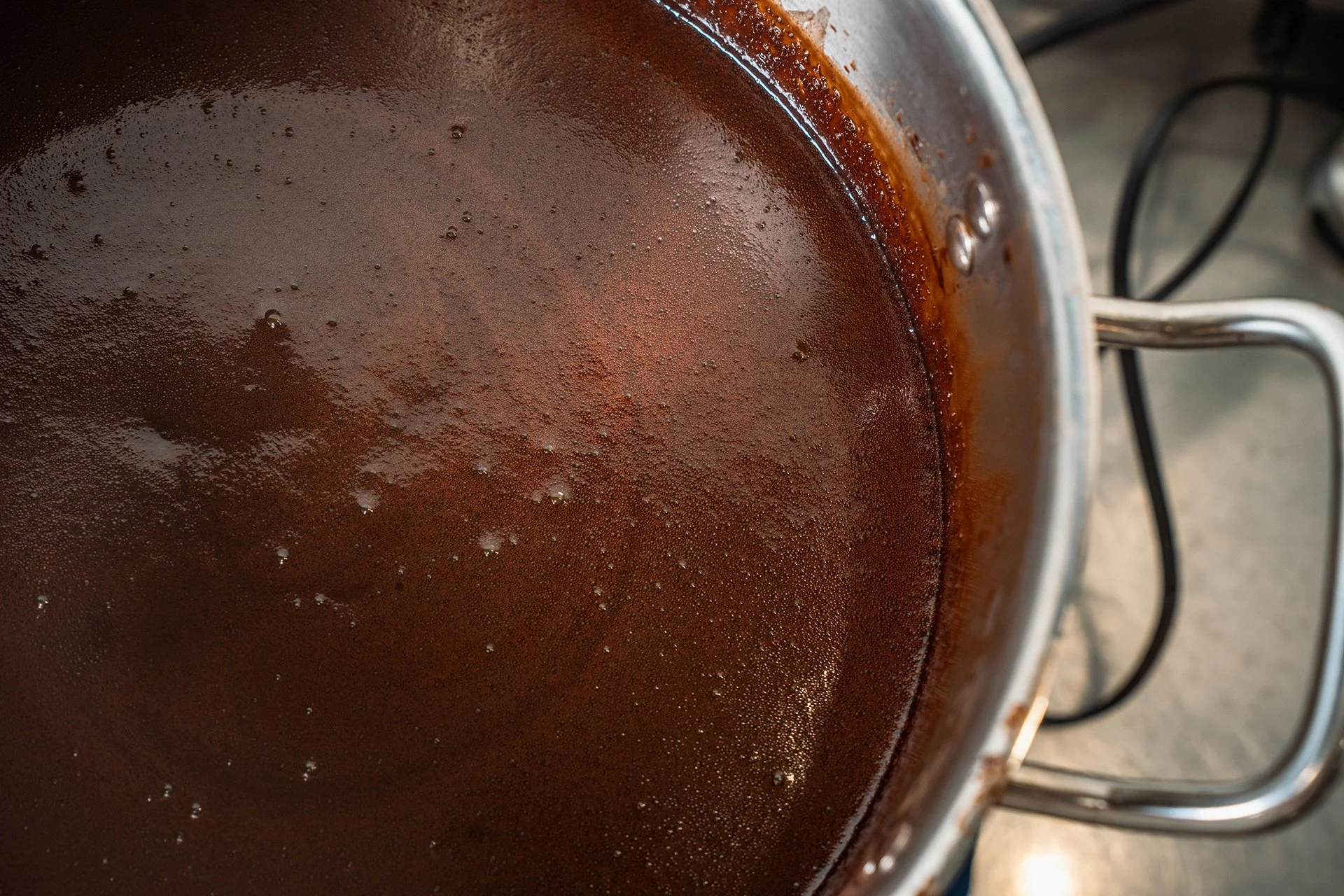
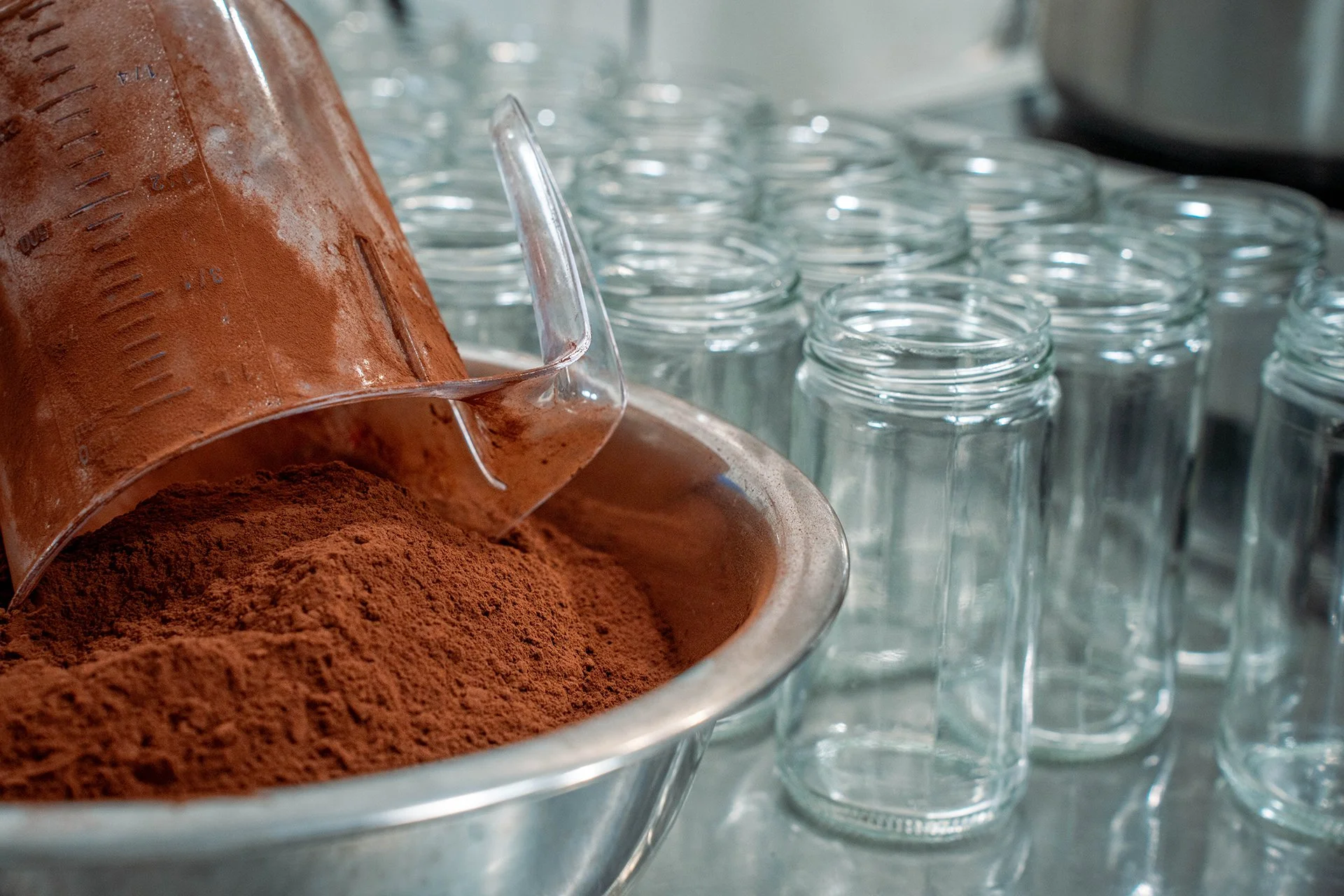
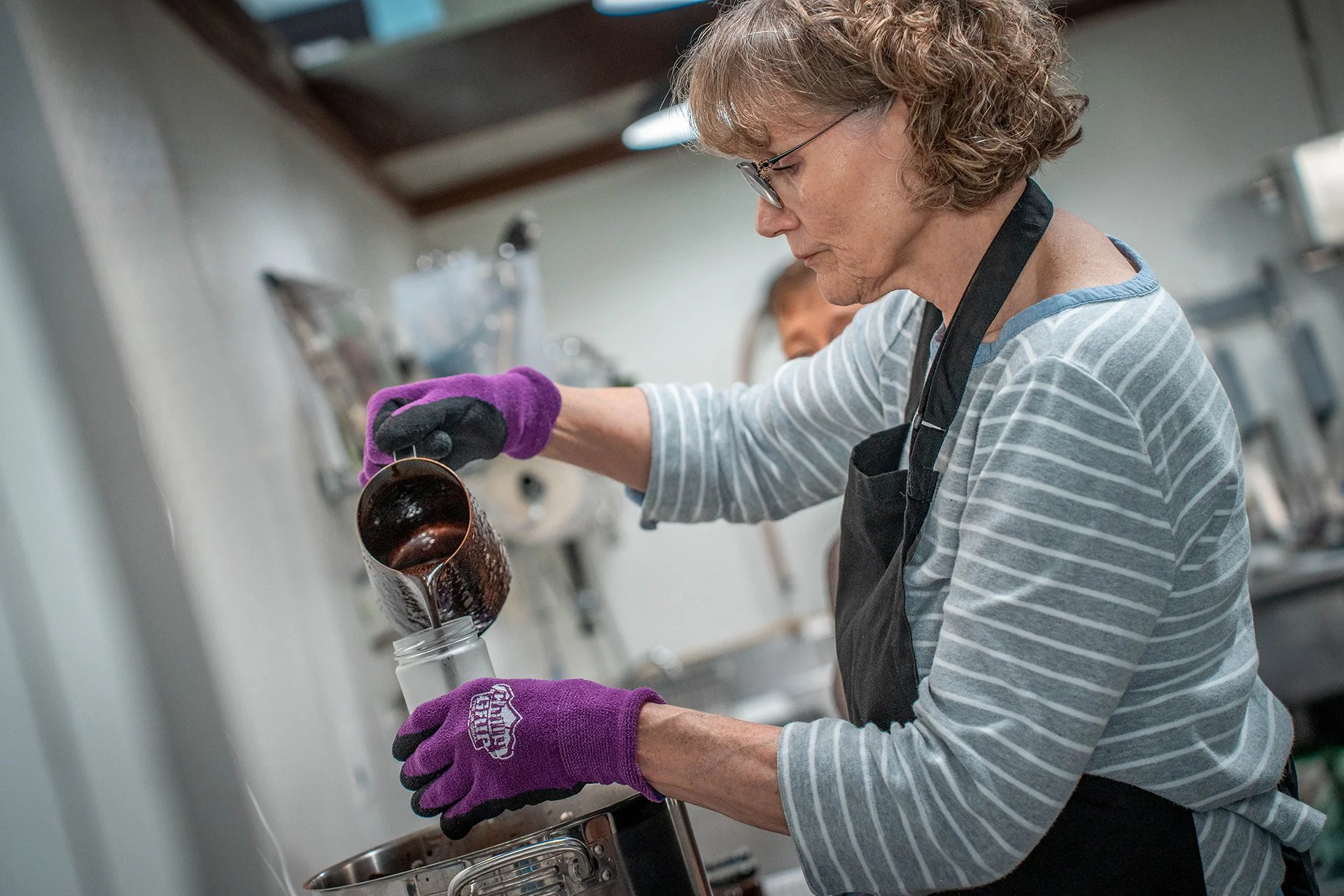
The chocolate sauce has its own version of that stubbornness. I watched the two women chat and laugh at each other like they’d been working together for years. While Cindy poured the chocolate sauce into sterilized jars and Jenni capped and sealed them, she told me that when she brought Jenni the original recipe, the first thing Jenni did was double the most expensive ingredient in it — a 100% organic, fair-trade cacao mass — because it made that much of a difference in how the sauce tasted. That cacao mass means a teaspoon runs about three grams of sugar, and it’s built to be used a teaspoon at a time, the same way you’d use a half ounce of shrub instead of drinking the entire bottle.
Here’s where this persistent through-line of “less but better” began to resonate with me. Jenni makes around 30,000 bottles of Wild Heart products a year, and when people tell her she should be in more stores, she smiles but doesn’t take the bait. A similar maker she knows got within striking distance of a million dollars but pulled back to half of that on purpose, because the bigger number wasn’t actually the goal. It just sounded like the goal.
That’s the language I keep hearing from small makers in this region: more was never the point. Making something that tastes good but is also good for people is the point. More is just the thing you’re supposed to say you want.
Both products, a sipping vinegar and a dark chocolate sauce, sit on the shelf at Colvin Ranch Provisions, who I also develop content for. Jenni was specific about why that particular shelf means more to her than some of the bigger accounts she could chase. Colvin Ranch’s whole operation — how they raise their animals, how they treat the land, and how they build community — comes from the same instinct she’s building her own business on. It’s not a business model for Jenni and Cindy, it’s closer to a personhood. Putting Wild Heart and Wild and Sweet at Provisions isn’t a distribution decision, it’s an alignment decision. The message they’re sending out with their product: picking up that bottle or jar means you’re supporting something local and something good for your body all in the same gesture.
I don’t think Shona’s Café is the outlier anymore. I think she was just the first one I happened to meet and fall in love with. And the exciting thing is there are more. More profiles coming down the pipeline in a the next few weeks that point to this way of slowly growing a business into something that matters.
Running out of a fan-favorite flavor of sipping vinegar at the farmers’ market or selling the last sausage roll at a bakery with a line still queuing out the door might not be a popular business strategy, but it just might help build a loyal customer’s character. I also know that things tend to taste better when I don’t get to have them all the time, and a business can be successful in more ways than just making money.
I feel so lucky to be sitting around tables with these makers, learning that. Less but better. I’m stealing that for my business model, too.
