

Chicory Isn’t Gone - It’s Evolving
Story and photos by Heidi Roth - Winter 2025 - Edible Seattle
Olympia’s Chicory may be closing, but their mission lives on
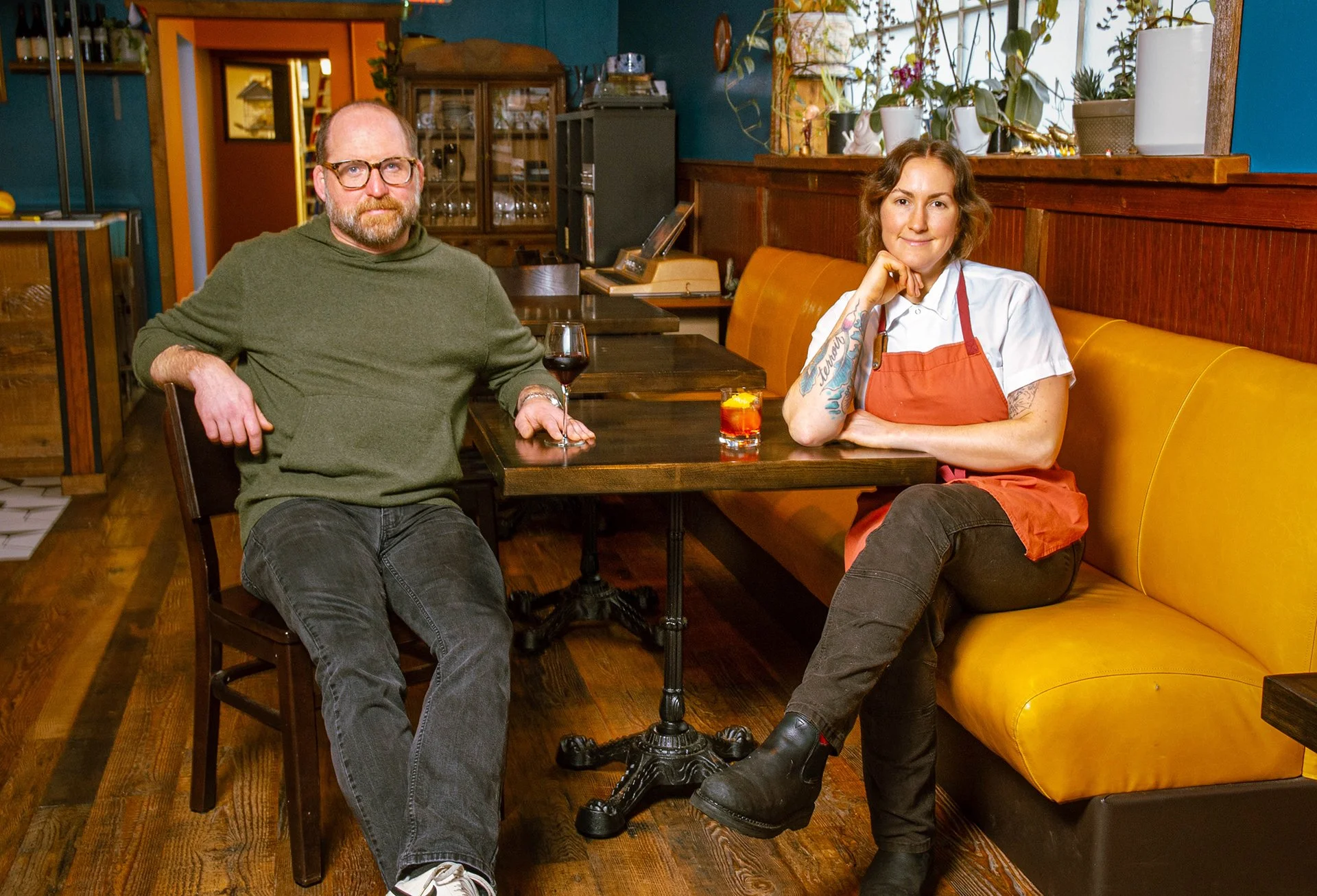
When Elise Landry and Adam Wagner opened Chicory in Olympia in the summer of 2020, they stepped into a storm. The pandemic had reshaped dining across the country, and approachable fine dining—the very model they had admired in their mentors—was suddenly more fragile than ever. Against those odds, Chicory thrived for five years, becoming a place where diners could experience the bounty of Thurston County’s farms through dishes rooted in Landry’s southern heritage.
This December, Chicory will close its doors. But for Landry and Wagner, this isn’t the end of the story—it’s a moment of reckoning with the state of fine dining in today’s economy, and a pivot toward something new. Rising operating costs, shifting dining habits and the challenge of building a hyperlocal sourcing model that’s both inspiring and financially viable have all shaped their next steps. For Olympia’s food scene—and for anyone curious about the future of dining—Chicory’s story offers a window into what it takes to run a restaurant at the intersection of passion and sustainability.
Since the beginning, Chicory’s mission has been about more than just creating a memorable dining experience. Landry and her team have sought to promote a deeper connection between consumers and food producers by highlighting seasonal ingredients from local farmers and growers.
“We try really hard to balance familiarity and nostalgia with innovation and exploration here at Chicory,” says Landry. “You can expect to see things on the menu that are familiar next to dishes that might be completely foreign to you.” She explains that Chicory builds the trust of their guests through that familiarity and, at the same time, encourages them to expand their food experience.
“No ingredient is off-limits for us,” says Landry. “If it grows locally and it is in season, we will find a way to use it and do our best to make it delicious.”
Opening their first restaurant in Olympia wasn’t just a coincidence. Thurston County has an abundance of fertile land and hard-working producers who are willing to be good stewards of it.
Landry channeled her Cajun heritage into her passion for cooking. In place of culinary school, she opted for first-hand experience, starting with a program at the Broadmoor Technical Center in Overland Park, Kansas, then moving to work in Massachusetts restaurants and bakeries after high school. Following time off to travel in South America, she returned to Kansas City to continue her career, where she eventually met her husband.
“Adam was one of the first partners who took my career seriously,” says Landry. “And his encouragement helped me realize the potential we had to open a restaurant of our own together.”
Tired of the Midwest’s climate, Landry and Wagner decided to move to the Pacific Northwest, searching for a place they could settle permanently.
“Our decision to move to Olympia had a lot to do with the abundance of ingredients that are available here,” recalls Landry. “I’ve worked in kitchens all over the country, and a lot of those specialty ingredients were coming from right here in Olympia’s backyard. Being closer to those ingredients just made sense.”
Within a year of moving to Olympia, the space at 111 Columbia Street became available for lease, and they moved quickly to open. And then, the pandemic hit.
“We had just received the keys to the space, our business loan had been approved, and everything else we needed to open Chicory was set in mid-February of 2020, a few weeks before the first shutdown. In other words, COVID was not a part of our business plan,” says Landry.
“Adam became my sous chef, and we spent every day in the kitchen waiting for the phone to ring for takeout orders,” she said. “This is when our Nashville Hot Chicken Sandwich came to be, which we still have on our menu today, and it helped us survive that dark winter. At one point, the sales of that sandwich were paying the rent.”
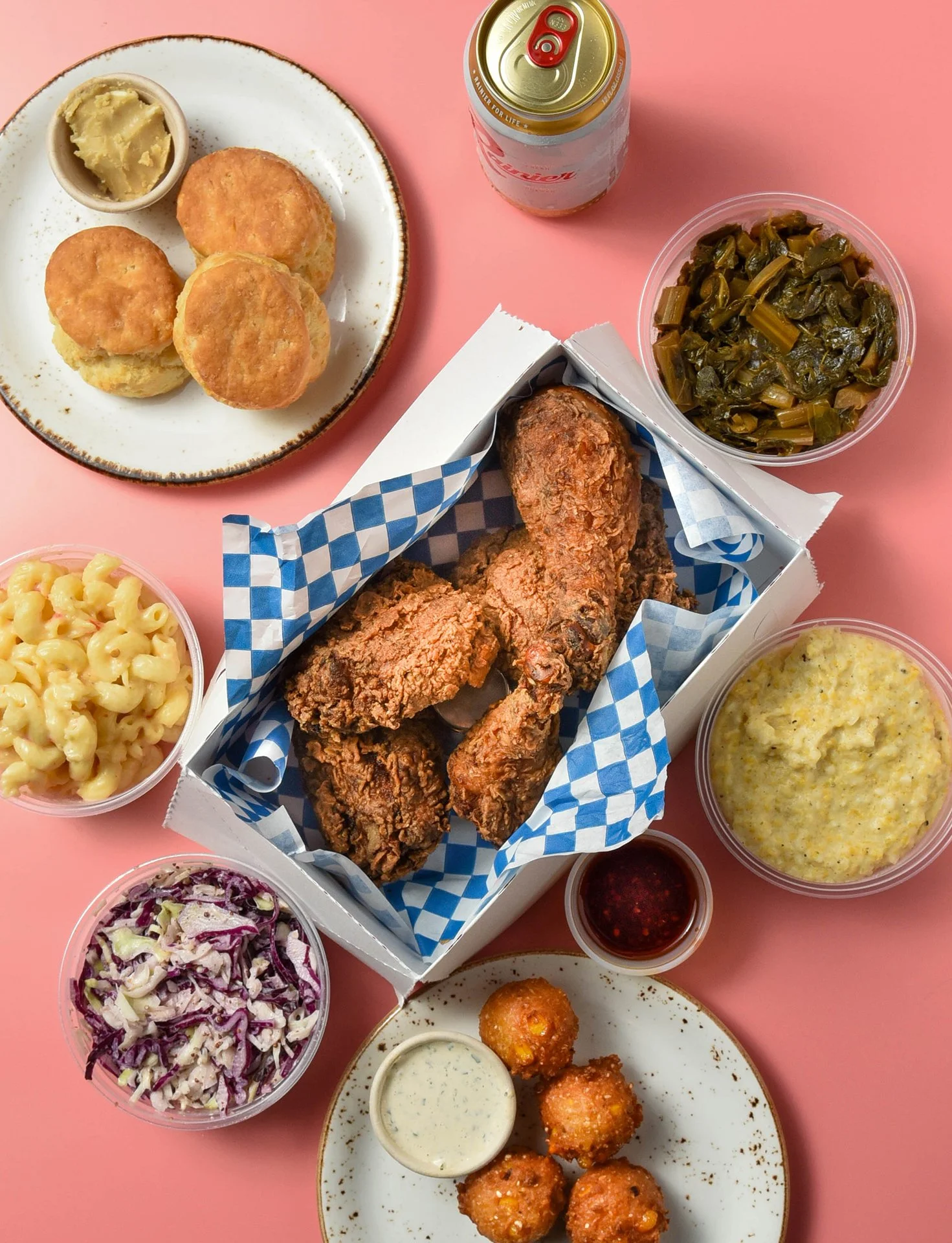
Chicory’s next incarnation, Gold Standard, will be a fun and approachable fried chicken joint, pulling on Landry’s southern upbringing
MENDING BROKEN FOOD SYSTEMS
Landry and Wagner’s commitment to working with small-scale purveyors and local farmers was foundational to the restaurant. Their values served them well, especially during the pandemic—unlike restaurants reliant on single, larger suppliers, whose occasional delivery failures posed an existential threat—Chicory was never hindered by distribution issues.
““Chicory got to a point where it felt like an impossible puzzle, and this feels like a whole new opportunity to take another swing at being creative, having fun and building on the success of our team.””
They also began to see a significant change in the price gap between what they bought from local farmers and what they would have sourced from large commercial suppliers—as time went on, the gap nearly closed. It was a critical shift in the way restaurants could support local producers, and it’s news Landry has loved sharing with Chicory’s guests.
Consciously choosing to sacrifice convenience for quality and valuealignment is a choice Landry feels is necessary to support a better food system. While it’s easier and more efficient to order all their essential supplies—from cleaning products to produce—from a single commercial purveyor, Chicory instead works with a dozen small suppliers. This approach, though requiring more effort to manage inventory and food costs, was a commitment to purveyors whose missions they championed. It also demanded a higher level of adaptability and creativity from the kitchen staff, with the menu based on what ingredients their farmers had available.
Given how often buying local means paying more, it would be easy to assume that Chicory’s mission to source locally and cook seasonally played a significant part in their decision to close. Both Landry and Wagner say that wasn’t the case—cooking seasonally means Chicory was using ingredients at their most affordable—during their peak season.
So what was the tipping point?
“Owning a restaurant has always been difficult,” admits Wagner. “Even when the economy wasn’t so affected, it took time to identify what wasn’t working.”
Landry feels that persistent economic uncertainty since the pandemic has shifted dining preferences away from what might be considered “experimental fine dining.” For many, dining out has become a pursuit of comfort and reliability, rather than exploration or risk—when it happens at all.
With just 30 seats, Chicory’s intimate dining room also poses a challenge. In a smaller city like Olympia, the restaurant’s scale—paired with local dining habits—made it difficult to sustain steady momentum. Many guests view Chicory as a destination for special occasions rather than a regular night out, and most preferred to dine earlier in the evening.
The limited space meant the restaurant often couldn’t keep up with the early dinner rush, leaving later hours much quieter. Though they never strictly required reservations, recommending them was enough of a barrier to discourage the impulsive, evening walk-in traffic they needed to fill the later service.
“Part of this comes from restaurants closing earlier, which tends to train people to want to eat earlier, so there’s an accountability aspect there,” says Wagner, but he’s quick to point out this isn’t a slight on the region’s diners. “It’s our responsibility as restaurant owners to adapt to diners’ habits and preferences, and find that intersection between what we want to do and what they’re looking for.”
Once the dust had settled from the pandemic, the writing was pretty much on the wall, says Wagner. “I remember thinking, I don’t know if we can ever be busy enough for this to actually work.”
IS FINE DINING STILL SUSTAINABLE?
Landry and Wagner entered restaurant work during a golden age, back when the Food Network elevated chefs to rock star status and new concepts like “New American cuisine” drove rapid restaurant growth. Notably, Landry herself was named a Chopped Next Gen champion in 2021.
While that enthusiasm hasn’t vanished entirely, both believe the bubble is bursting, signaling a transition to a new phase of restaurant life. Despite this, and their decision to close Chicory, they remain committed to the idea that fine dining should still be celebrated—and they’re nowhere near alone.
In the first half of 2025, more than 2,000 restaurants across Washington have shuttered—a sobering reminder of how tough the industry has become. In Seattle, even dining mainstays are carefully considering their next moves.
No strangers to challenge, many restaurateurs have endured a long, uneven recovery from COVID-19, navigated complex regulations and contended with some of the highest minimum wages in the country. Tight margins are nothing new, but the pressure has intensified.
To survive, many restaurants are diversifying. Some are adding brunch service to attract new guests, while others are reworking schedules, trimming hours and staggering shifts to more efficiently manage costs.
Even celebrated establishments, places lauded by the James Beard Foundation and prominent publications, are not immune. When they announce closures on social media, a wave of community support often follows, filling reservations for their final weeks. But for many, the surge comes too late to reverse the financial strain.
Recognizing that rising costs and shifting dining habits call for transformation, Landry and Wagner knew they’d need to adjust their approach.
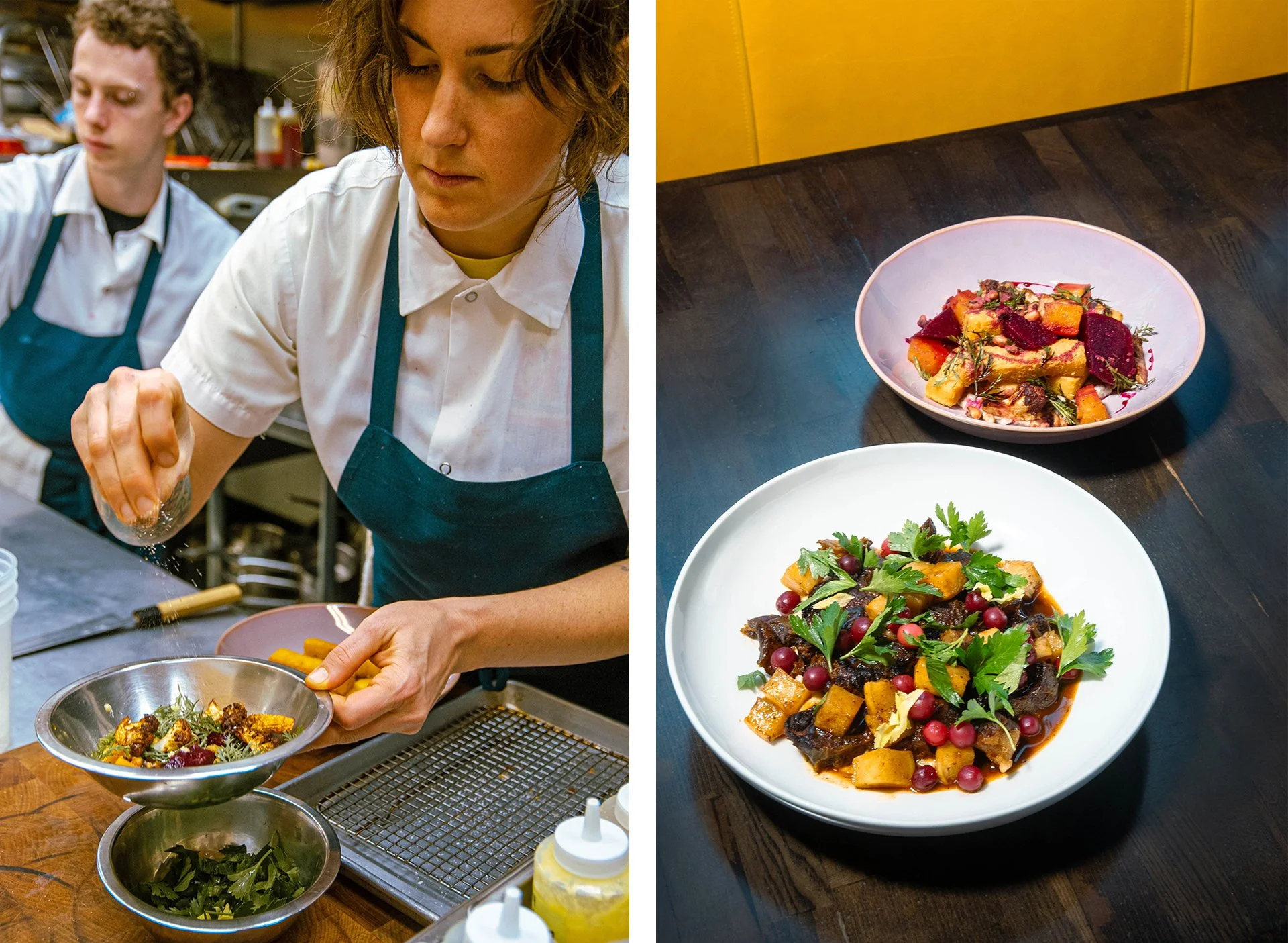
Left: Chef Elise Landry focuses each menu on local farmers’ peak-season produce. Contrary to popular belief, the price gap between local and corporate food suppliers closed for Chicory during the pandemic. Right: Chicory’s local-food-first ethos, highlighted by dishes like this Colvin Ranch braised osso bucco, won’t leave when the restaurant closes. The team plans on launching a monthly supper club where they can flex those fine dining muscles.
THE NEW GOLD STANDARD
As they transition from operating Chicory and look forward to their next chapter, Landry emphasizes that their proudest accomplishment goes far beyond the menu. The most rewarding aspect has been successfully building a network of local farmers, purveyors and devoted community members who share their vision.
“I think we helped galvanize a pretty large group of people who are passionate about food systems,” said Landry, who is proud to give them a physical place to celebrate where their food comes from, ultimately defining the unique style of Chicory.
“My attitude is that it would be wildly improbable that the first restaurant we opened would be our last restaurant,” says Landry. Loving Olympia and the community they’ve built here meant the Chicory team would need to find a more sustainable way to champion its food scene.
The evolution of their next concept, Gold Standard, was guided by success outside Chicory’s main service, along with that pandemic-driven Nashville Hot Chicken Sandwich. For the past year, the team has run monthly, consistently sold-out fried chicken pop-ups to perfect their recipe and technique. Their popularity confirmed the community enthusiastically embraces this kind of food: high-quality fried chicken, comforting sides and salads.
The new concept also reflects Landry and Wagner’s desire to inject more delight and fun into the dining experience. The enthusiasm the kitchen staff found in preparing special events—like crawfish boils, barbecue and Monday specials—proved contagious to guests. This approach showcases what Wagner refers to as “elevated nostalgia” through relatively uncomplicated food, but cooked with passion and joy.
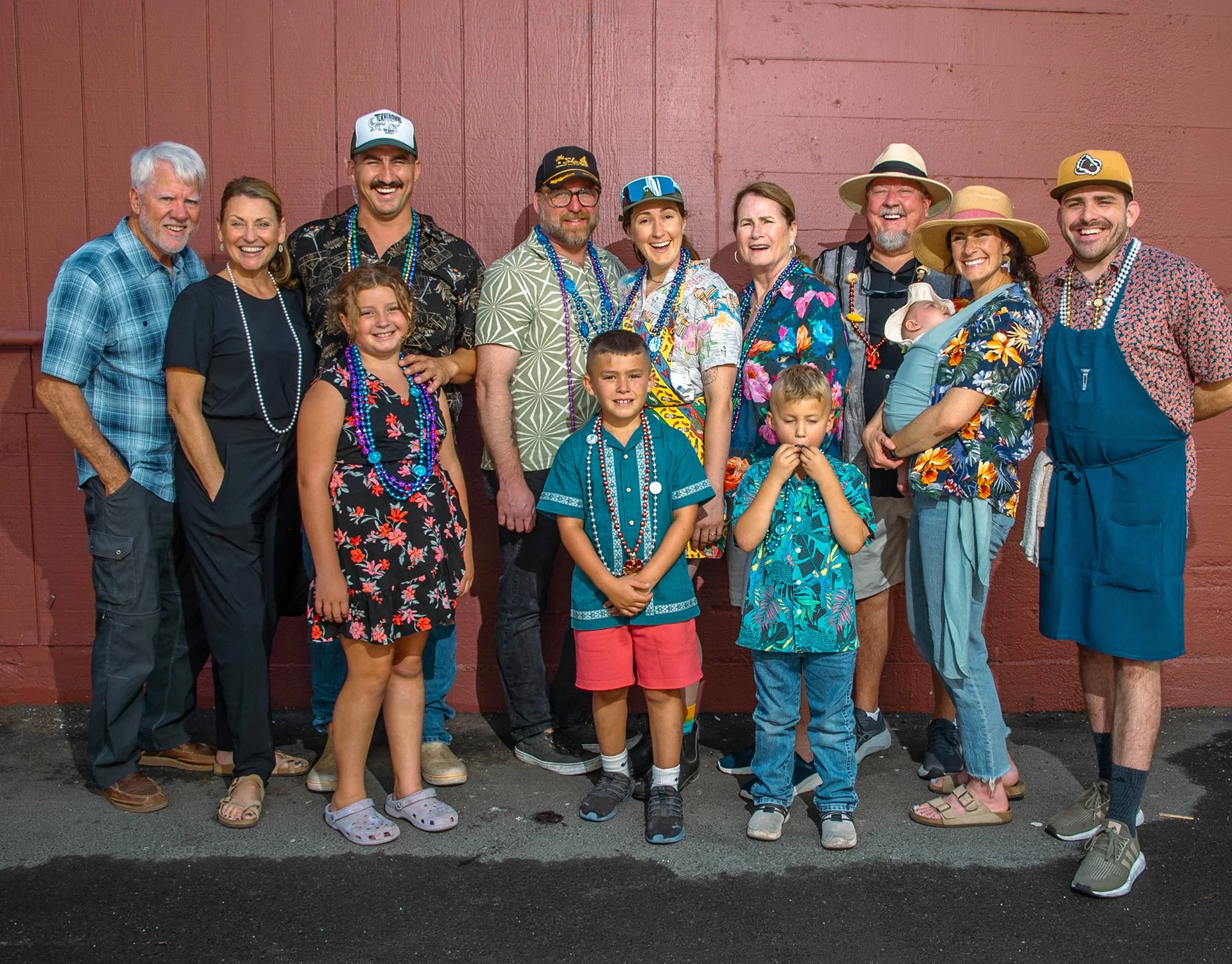
“Food doesn’t always have to be ‘super serious,’ says Landry. “It can be silly and exciting while still maintaining the highest quality and integrity.”
Gold Standard will be a counter-service restaurant, featuring comfort food staples like fried chicken, sandwiches, biscuits and beignets—alongside fresh vegetable dishes and a small pastry program—a direct response to the immense popularity of their pop-ups. Recognizing a gap in the local market, Landry explains that downtown Olympia lacks a dedicated fried chicken spot, and she sees the dish as a versatile blank canvas, offering limitless opportunities for play.
Crucially, the new model balances accessibility with their desire to retain Chicory’s fine dining creativity. While the daily service will be approachable, they’re considering hosting a monthly supper club to reintroduce the fine dining, multi-course food they honed at Chicory.
As Chicory prepares for its final service, Landry is clear: the philosophy that guided the restaurant—hyperlocal sourcing, deep farmer partnerships and caring for their team—isn’t going away. What’s ending is a business model that has become increasingly difficult to sustain, even for the most beloved and award-winning restaurants across the country.
Landry and Wagner’s decision to give the Chicory staff three months’ notice of the closure paid off in a meaningful way: the team opted to stay together to see the restaurant through its final service. The co-owners said that their staff’s loyalty—to Chicory and to each other—means the world to them.
Lucas Campbell, Chicory’s sous chef, has been on the crew since 2022. Having worked every position in the kitchen, Chicory’s closing will coincide with the next phase of his career, but he remarked the transition is bittersweet.
“For the community, and myself as a member of that community, Chicory closing is sad, because we are losing something unique—a style of restaurant that Olympia hasn’t had before,” says Campbell. “I think the next restaurant will be its own unique entity, while keeping with some of those themes that made Chicory so special…our current kitchen is a very close-knit team of young cooks, who are passionate about learning. I think the opportunity to keep that team and mentality together is why many of the staff at Chicory will be joining the new concept.”
The announcement also prompted an outpouring of community support, leading to a hoped-for surge in business in their final weeks, and the transition marks an exciting, fresh start.
“Chicory got to a point where it felt like an impossible puzzle, and this feels like a whole new opportunity to take another swing at being creative, having fun and building on the success of our team,” says Wagner.
For diners in Olympia and beyond, Chicory’s legacy is a reminder that eating locally is about understanding the fragile ecosystems of restaurants, farmers and artisans that make those meals possible. Landry and Wagner aren’t done building. Their next chapter will carry forward the spirit of Chicory—rooted in the same values, growing with a changing world.
