

Life Lessons in a Lavender Field
Story and photos by Heidi Roth
Miriam Padilla almost went to law school. Now she teaches kids to cook in Olympia, on her days off
from an actual restaurant job.
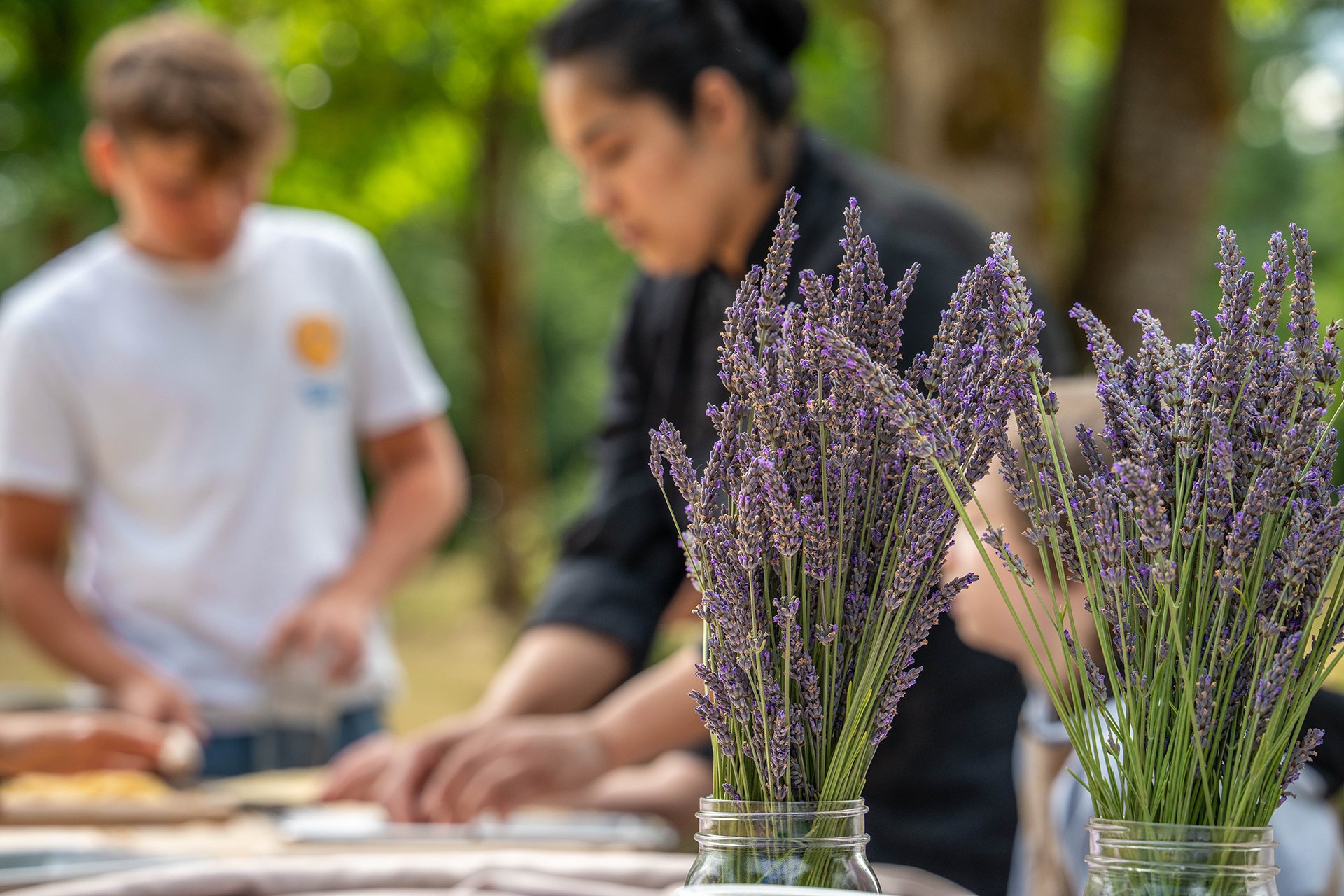
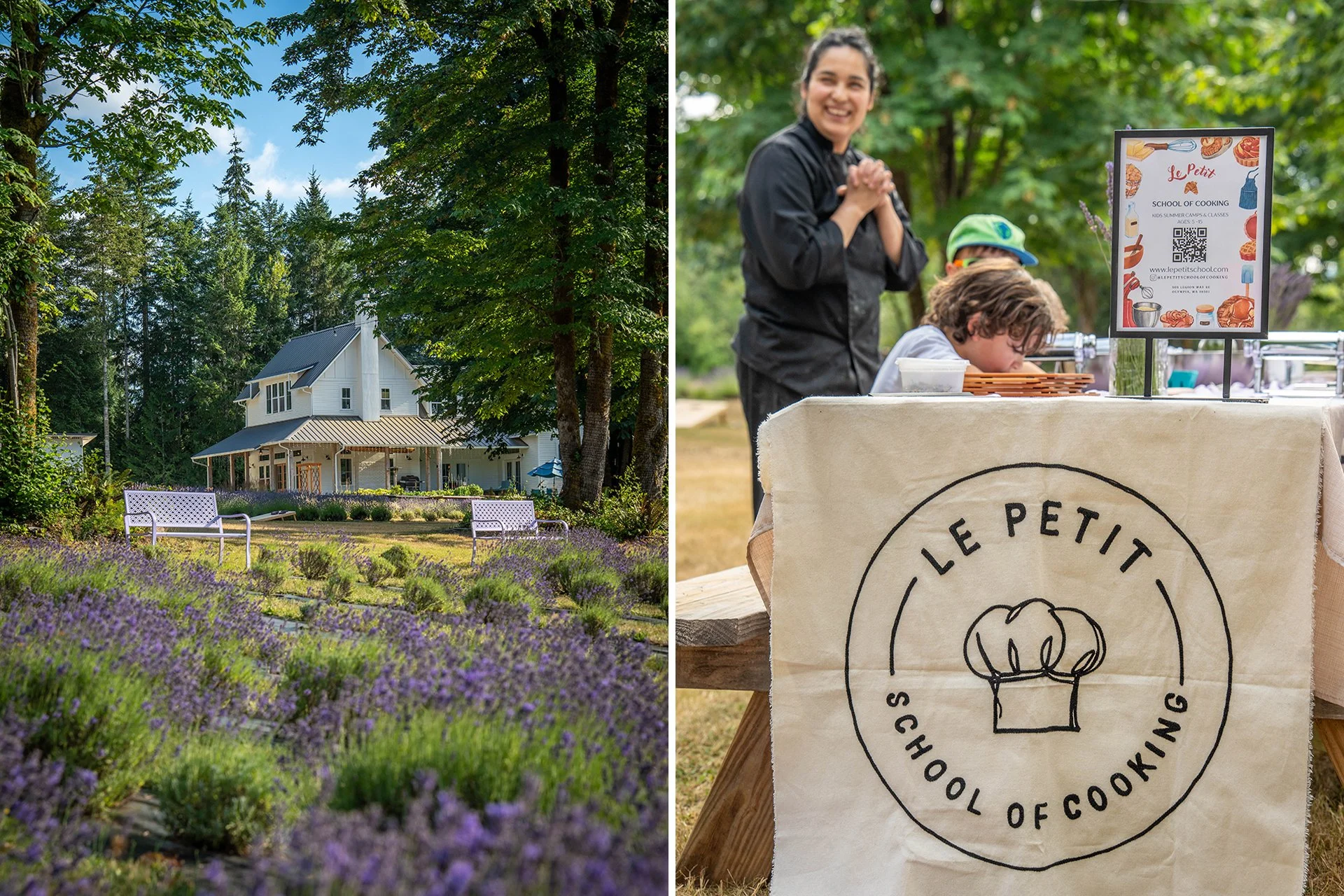
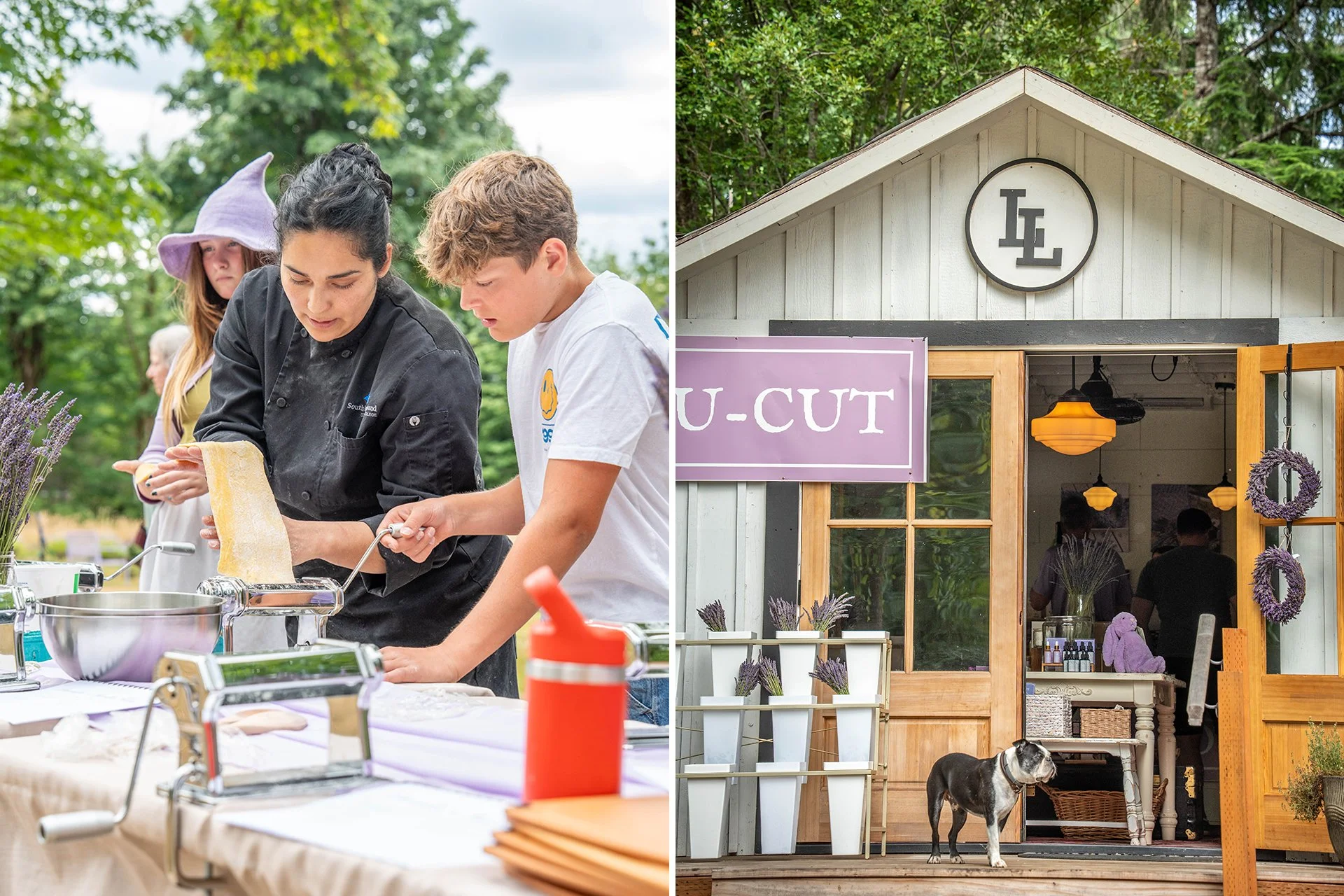
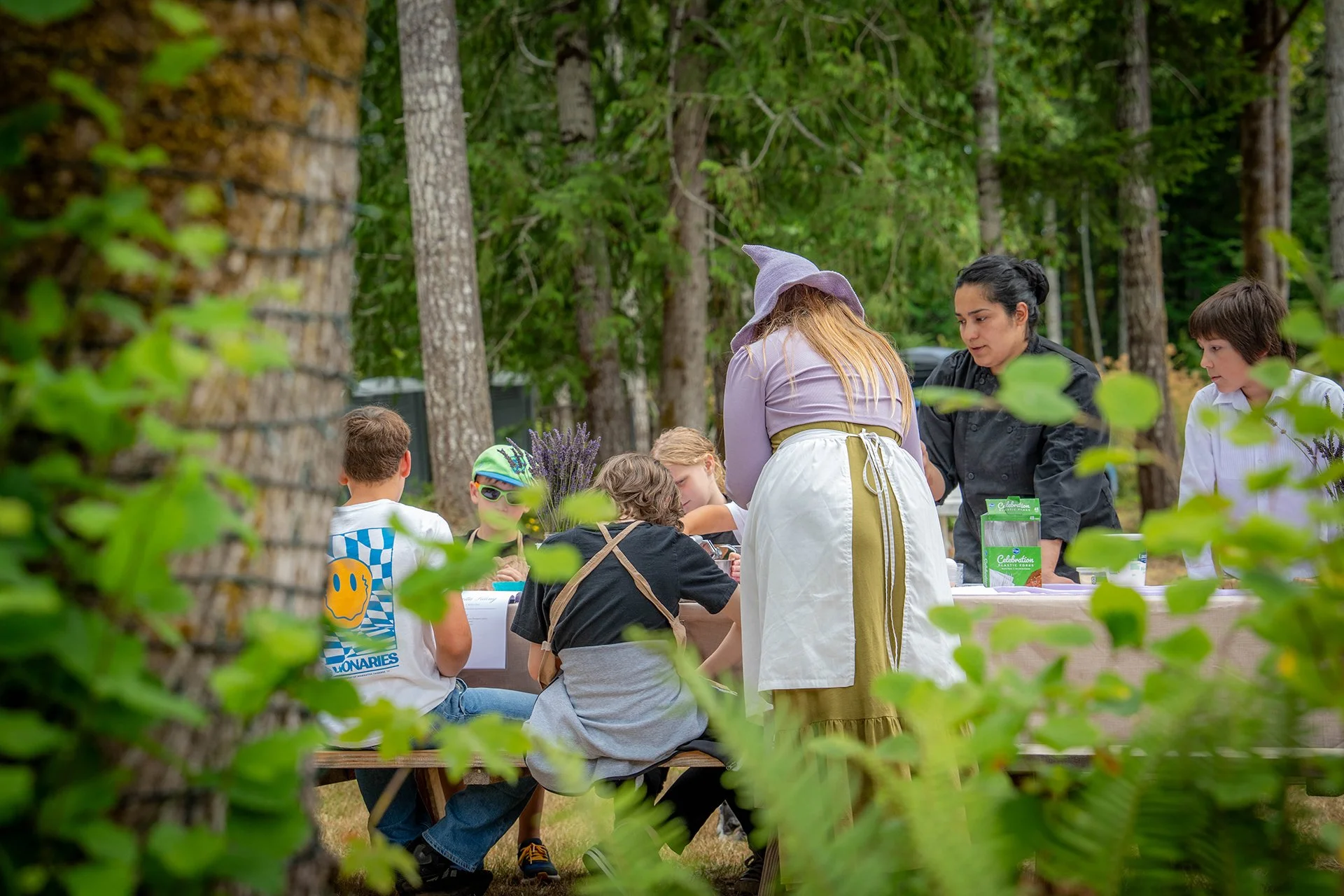
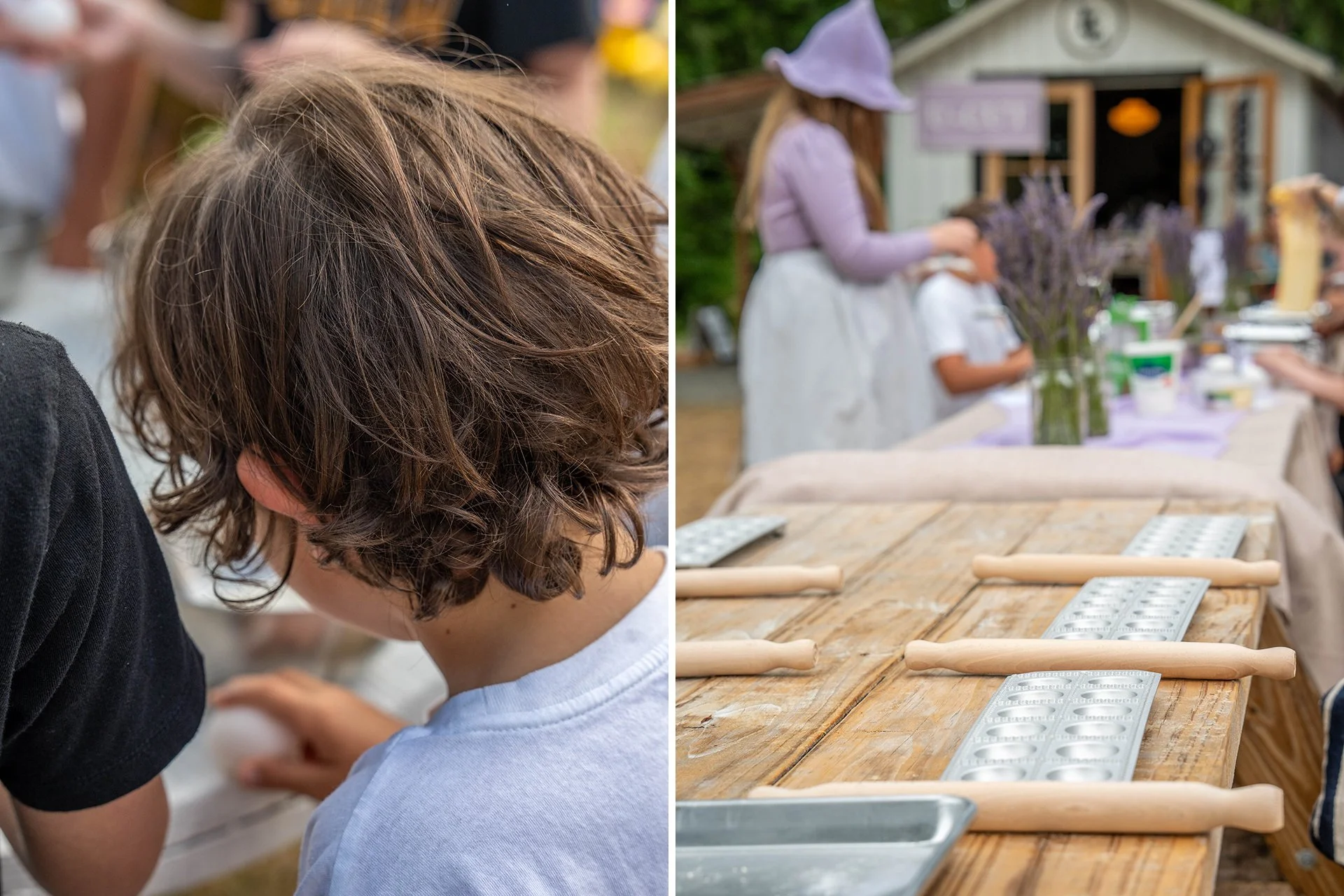
Mid-July is peak lavender season in southwestern Washington. As I stood in a lavender field at Loblolly Farm just outside of Shelton, I watched a dozen kids under the age of twelve drink in how what’s grown in a field can end up on their plate before they’d touched a single pot.
That’s just fine with Miriam Padilla, the chef running the outdoor workshop. She’d rather a kid understand where a farm sits in the story of their food than get the pasta rolled perfectly.
Miriam runs Le Petit School of Cooking, a cooking school for kids five to seventeen that just opened its first real space in Olympia this month. She was still unpacking boxes into cabinets the week I talked to her. She also works the line at Field Bar + Bottle in Tacoma, Wednesday through Saturday nights, which means most weeks she is teaching eight-year-olds how to control the heat under a pan in the morning before running a dinner service an hour north by evening. If that sounds like two full lives stitched together with kitchen tape and a driving playlist, it basically is.
Trading case files for cutting boards
Miriam studied political economy in college, and after taking the LSAT, she applied to law school, got in, and spent a few years working dependency law — the cases where parents are fighting the state to keep their kids, and the kind of work that often follows you home. Cooking was the thing that got her through those years, but it wasn’t necessarily part of her life plan.
Then COVID happened, and like it did for a lot of people, it knocked loose the question of what a different kind of life could look like. She enrolled in the culinary arts program at South Puget Sound Community College, mostly because it was close by, and stayed because of an instructor named JP who ran the program quite differently from how most culinary programs were being run. Instead of continuing to allow old school kitchen culture and its extreme hierarchy to creep into the training, JP used a different approach. He didn’t abandon discipline or high standards, he just taught those things didn’t require abusive behavior, and he’s still one of the first people she’ll call when she needs advice in the kitchen.
“I don’t think you need a degree to be a good cook,” she told me. “But for me, the highlight was definitely organizational structure.” Which is a very Miriam way to put it — not romantic, just true. She’ll tell you the thing culinary school actually gave her wasn’t technique. It was learning how to lead a kitchen without needing to break people to do it.
She’s cooked in almost every kitchen in Olympia, and each one left a mark
At Gardner’s, she was the first full-time woman in the back of house in the restaurant’s forty-year history — as far as anyone there could tell her. At The Reef, she helped breathe new life into an iconic location that had sat dormant for years, and took her first real shot at leadership there. She also watched what happens when a kitchen gets pulled in two directions at once: how much of the menu comes from the chef’s heart, and how much comes from a community that wanted the same dish they’d ordered when Curt Cobain frequented the restaurant.
By the time she got to Mi Luna Cuban Cafe, she had a clearer idea of the kitchen she actually wanted to build — one where, as she put it, “you can be respectful with your coworkers and address things in the space. You don’t have to take things home and start growing resentment. You don’t have to yell at people. You don’t have to belittle anyone.” While kitchen culture is evolving, it’s still a stressful environment, and there are plenty of opportunities for things to get heated.
These days it’s Field Bar + Bottle, where everybody trades off being a dishwasher. Servers run food, cooks bus tables, tips are split evenly, and the place has kept nearly every employee it’s hired in six years, which in the industry is basically unheard of. “To achieve that level of mutual understanding and respect,” she said, “is really challenging.” She talks about Field the way some people talk about a good marriage: not perfect, but proof that with some effort and care, it’s possible.
Le Petit didn’t start with an idea so much as it started with a mixer
Before Le Petit, Miriam directed another organization’s kids’ cooking program where she kept running into the same wall: sixteen kids, one stand mixer, and a curriculum that mostly meant watching her cook instead of cooking themselves. Kids would come for the first class and never return. So, class by class, she started buying her own equipment and hauling it to and from every class. When kids had their own hands on their own tools, they became more committed. She noticed this happening over and over, until it became the entire philosophy of the school: kids learn by doing, not by watching.
What actually happens in a class
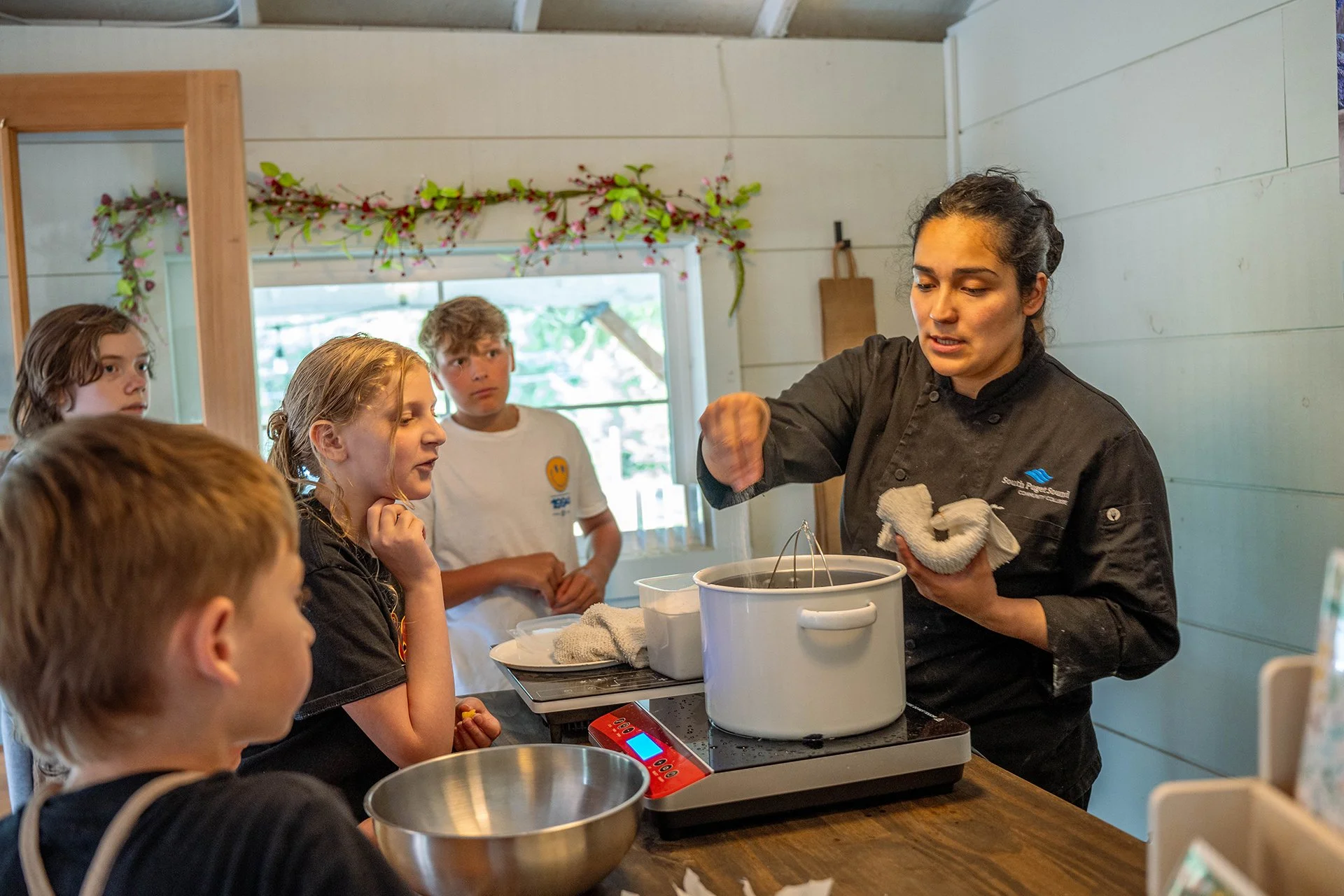
The week I spoke with Miriam, Le Petit was running a camp called A Week with Julia Child, and it started, as it should, with a French omelet. A lot of butter, and a lot of room to fail. One student could not get the heat right. He was frustrated and clearly rattled, but went to grab more eggs for a second try. Miriam suggested he come back the next day instead — that sometimes a clear head does more than pushing through. He came back the next morning, asked to try again first thing, and burned the omelet again. “I feel pretty good about this one,” he told her. “It’s better.” Miriam laughed, “I told him, ‘the cool thing about cooking is that you can’t get worse. The more you practice, the better you get.’”
That’s the whole class, basically, folded into one burnt omelet and the courage to try again. “It’s hard to separate food from feelings,” Miriam told me, and she means it literally. Years ago, mid-meltdown in a restaurant kitchen, a veteran line cook stopped what he was doing, looked at her, and said, “It’s just food. People are more important.” Watching her teach her students real life lessons (like not “yucking” someone’s “yum”) at the lavender farm back in July, it’s clear she’s adopted this way of cooking wholeheartedly.
Her own food story shows up in the classroom too, even when she’s not naming it directly. She’s the daughter of immigrant parents, and she grew up on beans, tortillas, and whatever WIC and food stamps covered, not the tasting-menu childhood people sometimes assume chefs had. She didn’t try what most people would call “diverse” food until she was in her mid-twenties. “My background was built on the backs of immigrant people,” she told me. “I would not be able to pursue this passion project if it were not for my parents coming here.” It’s why she’s fairly unbothered by cooks who feel intimidated stepping outside the cuisine they grew up with. People migrate, and food does too.
The dream of building a sustainable business
Miriam is not choosing between cooking and teaching right now. She is doing both of them, at the same time, and it is genuinely exhausting. Summers are the hardest; camps Monday through Friday from eight to three, two full groups of kids, and then Wednesday through Saturday she drives to Tacoma and works until Field closes. When I asked if there’s a version of this where she leaves restaurant work behind entirely, she didn’t hesitate: “That would be the dream.” But then, just as quickly: “Realistically, I’m afraid to lose my restaurant job. I need a steady income, and it’s still early on in the game.” Restaurants are closing. People are spending less. She knows exactly how precarious this is, and she’s doing it anyway. I don’t think that tension is a problem to be solved so much as it’s just the actual shape of building something new while keeping a roof over your head.
Where this goes, if it works
The camps sold out this summer, which she’s rightly proud of, but she’s already getting more requests for financial assistance than she can currently afford to grant. She chose not to structure Le Petit as a nonprofit specifically so she could pay her instructors a living wage, which is its own quiet, unglamorous kind of integrity. Long term, she wants this to stop being a one-woman operation and become something the community actually holds. The real dream is a school on a farm — somewhere the kids feed the scraps from prep to the chickens before they come back in to cook. “I am so enthusiastic about encouraging the kids to support the people who grow their food, the people who harvest their food,” she says. “I think living in a big corporate, capitalistic world, it’s hard sometimes to see that.”
The school on a farm may be a way’s off yet, so she’s making due with what she has, which right now is a mostly-unpacked space on Legion Way and a waitlist of parents.
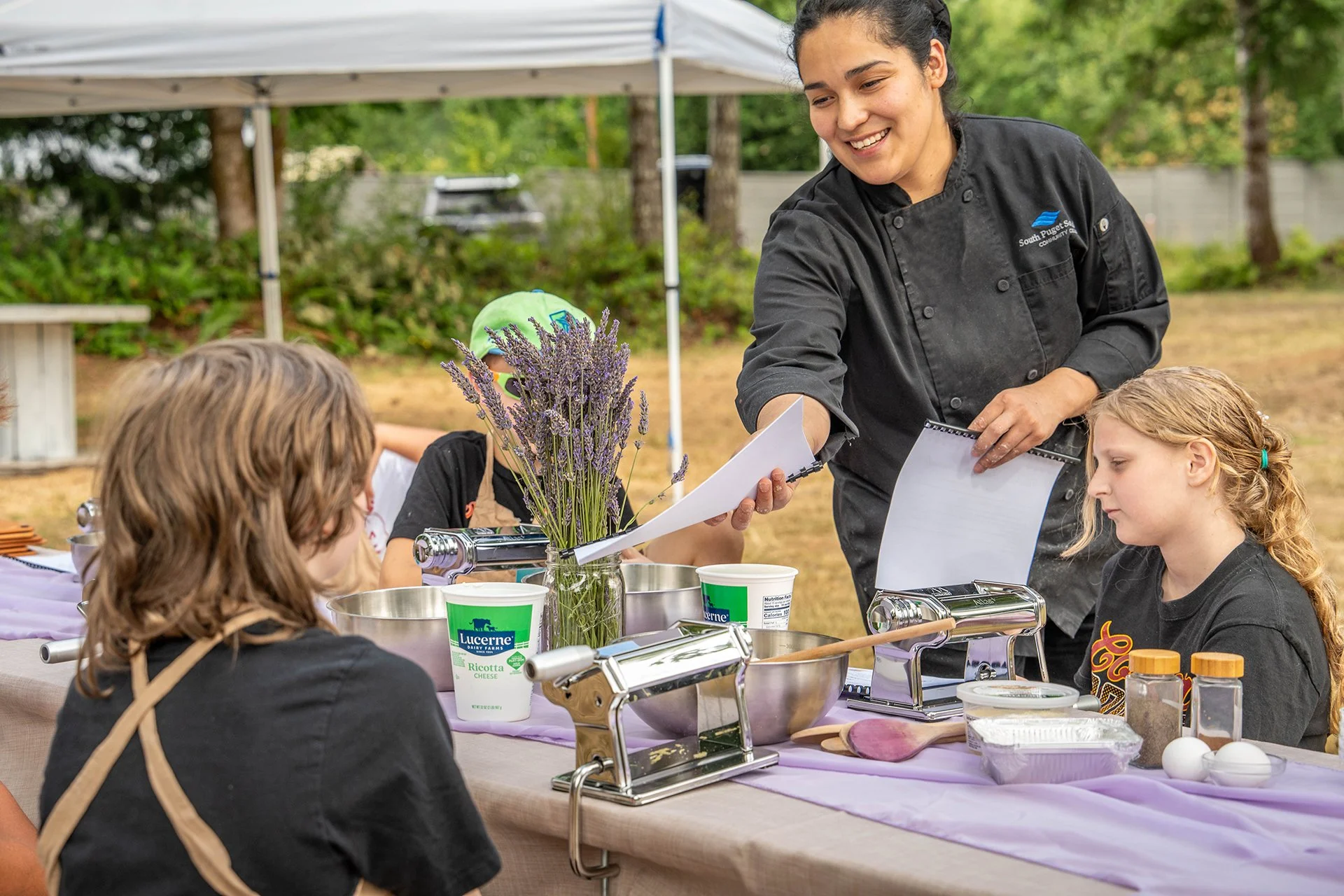
When I asked what she wanted a kid to remember about taking a class with her ten years from now, she didn’t overthink it: “You can do it. Just keep trying and do your best. You don’t have to love it, you don’t have to like it, but you should always try it.” Then she added that she hopes they keep cooking at home — that parents will come back a few classes later and tell her their kid made the dish again, on their own at home, for no reason except that they wanted to.
I believe her. I also believe that’s a harder thing to build than it sounds — and that she’s building it with whatever hours are left over after a shift on her feet somewhere else.
If you're new here: I write about the people doing the most meaningful work in food and agriculture around Southwest Washington — the ones usually too busy doing the work to talk about it. Subscribe if you want more of this.
And if you're one of those people and want to talk about working together, you can learn more about how we can work together here.
